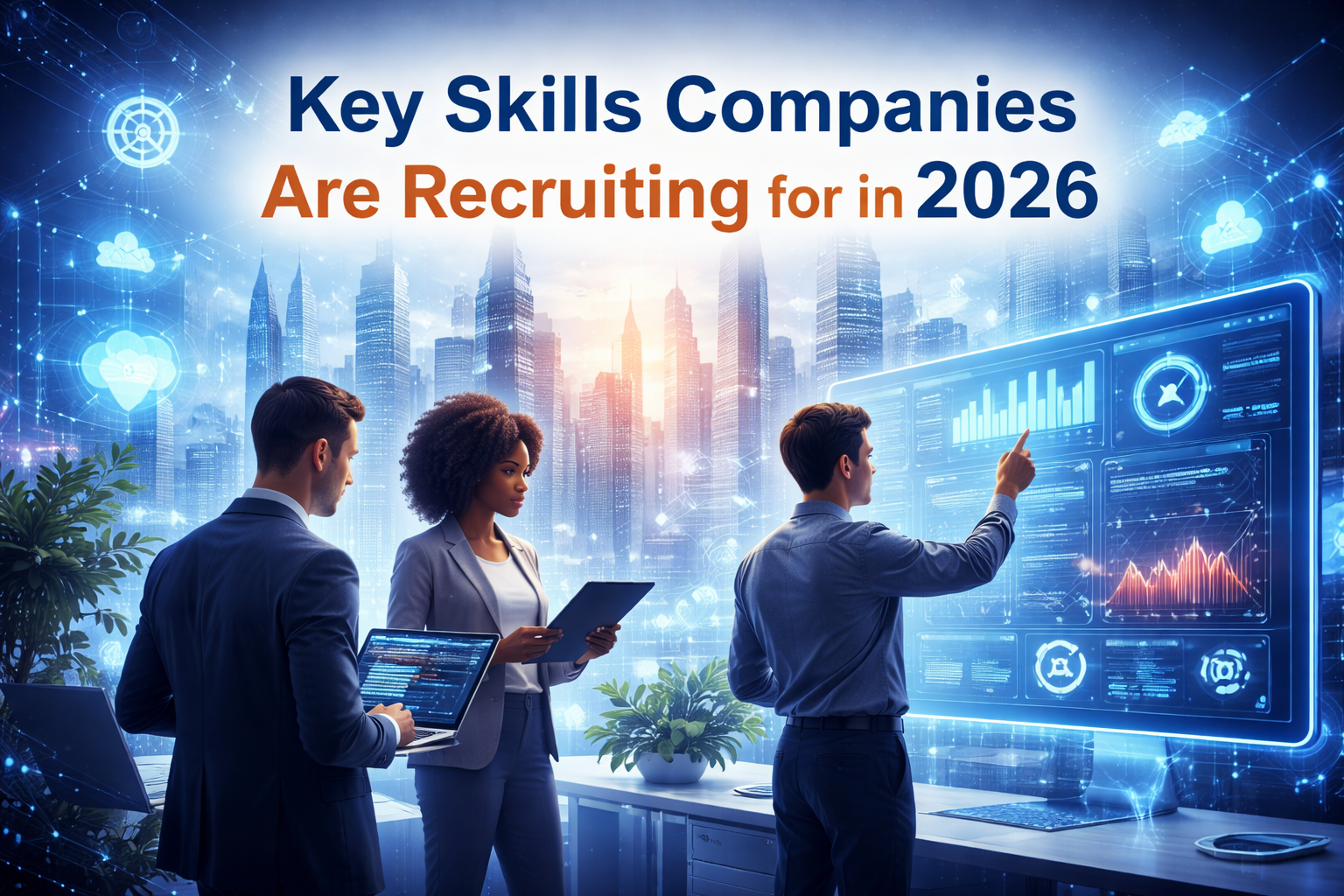
The hiring landscape in 2026 reflects a powerful shift: companies are no longer searching for professionals who only “know the tools.” Instead, they want talent that can apply technology strategically, adapt quickly, and collaborate effectively.
Technical depth still matters – but it must be paired with critical thinking, innovation, and a strong sense of responsibility
Here is a fresh look at the most in-demand skills shaping technical hiring in 2026:
1. Expertise in Emerging and Core Technologies
Modern employers expect strong command over high-impact technologies that drive digital transformation.
Artificial Intelligence & Machine Learning
Professionals must not only develop and deploy intelligent systems but also understand model optimization, bias reduction, and responsible AI implementation.
Cloud Computing & Distributed Systems
Experience designing and managing scalable infrastructure across single or multi-cloud environments is essential. Knowledge of performance optimization, cost control, and cloud security adds major value.
Cybersecurity & Risk Management
With cyber threats growing more sophisticated, companies seek experts who can implement proactive defense strategies, zero-trust frameworks, and secure coding standards.
2. Modern Software Engineering Excellence
In 2026, writing code is just the starting point. Employers value engineers who can build reliable, scalable, and maintainable systems.
- Proficiency in full-stack development
- Strong understanding of software architecture and clean code principles
- Automated testing and quality assurance practices
- Experience with DevOps, CI/CD pipelines, and deployment automation
Speed matters – but sustainable, high-quality development matters more.
3. Systems and Architectural Thinking
As digital ecosystems grow more interconnected, companies need professionals who see the bigger picture. Systems thinking involves understanding how components interact, identifying bottlenecks, and designing flexible architectures that can evolve with business needs.
This capability reduces technical debt, improves efficiency, and supports long-term scalability.
4. Continuous Learning and Agility
- Actively reskill and upskill
- Experiment with emerging technologies
- Thrive in fast-changing or ambiguous environments
Adaptability has become a competitive advantage rather than a soft trait.
5. Advanced Problem-Solving Abilities
- Break down complex problems into manageable parts
- Identify root causes quickly
- Propose scalable and practical solutions
Strong analytical skills directly influence innovation and operational efficiency.
6. Collaboration and Communication Skills
Technology projects are rarely solo efforts. Engineers and technical experts must work closely with designers, product managers, executives, and clients.
The ability to explain complex concepts in simple terms and align with cross-functional teams significantly increases professional impact.
7. Business and Product Awareness
- Prioritizing user experience
- Connecting technical decisions to business outcomes
- Balancing innovation with practicality
8. Ethical Technology and Governance Knowledge
Awareness of data privacy, fairness in algorithms, transparency, and compliance standards is now fundamental.
Ethical technology development builds trust—an essential currency in today’s digital economy.
Frequently Asked Questions (FAQ)
1. What are the top skills employers are hiring for in 2026?
AI literacy, data analytics, cybersecurity, cloud computing, sustainability expertise, emotional intelligence, and adaptability.
2. Are soft skills still important in 2026?
Yes. Leadership, communication, and emotional intelligence are critical for managing hybrid teams and driving innovation.
3. Is coding mandatory for future careers?
Not in every role, but basic coding literacy enhances digital fluency and career mobility.
4. How can professionals prepare for 2026 job demands?
Through certifications, practical projects, industry networking, and continuous learning strategies.
5. Are sustainability skills really in demand?
Yes. ESG compliance and green initiatives are becoming mandatory across many industries.
6. How frequently should skills be upgraded?
At least annually, with ongoing monitoring of industry trends and workforce evolution.
Summary
Employers in the technological sector are looking for workers in 2026 who possess advanced technical knowledge along with flexibility, strategic thinking, and excellent people skills. Technical expertise opens doors, but long-term influence and professional advancement are fueled by adaptability, teamwork, and moral discernment.